How Should Men Over 50 Start Strength Training? A Safe, Practical Guide

19 topics4 blog posts
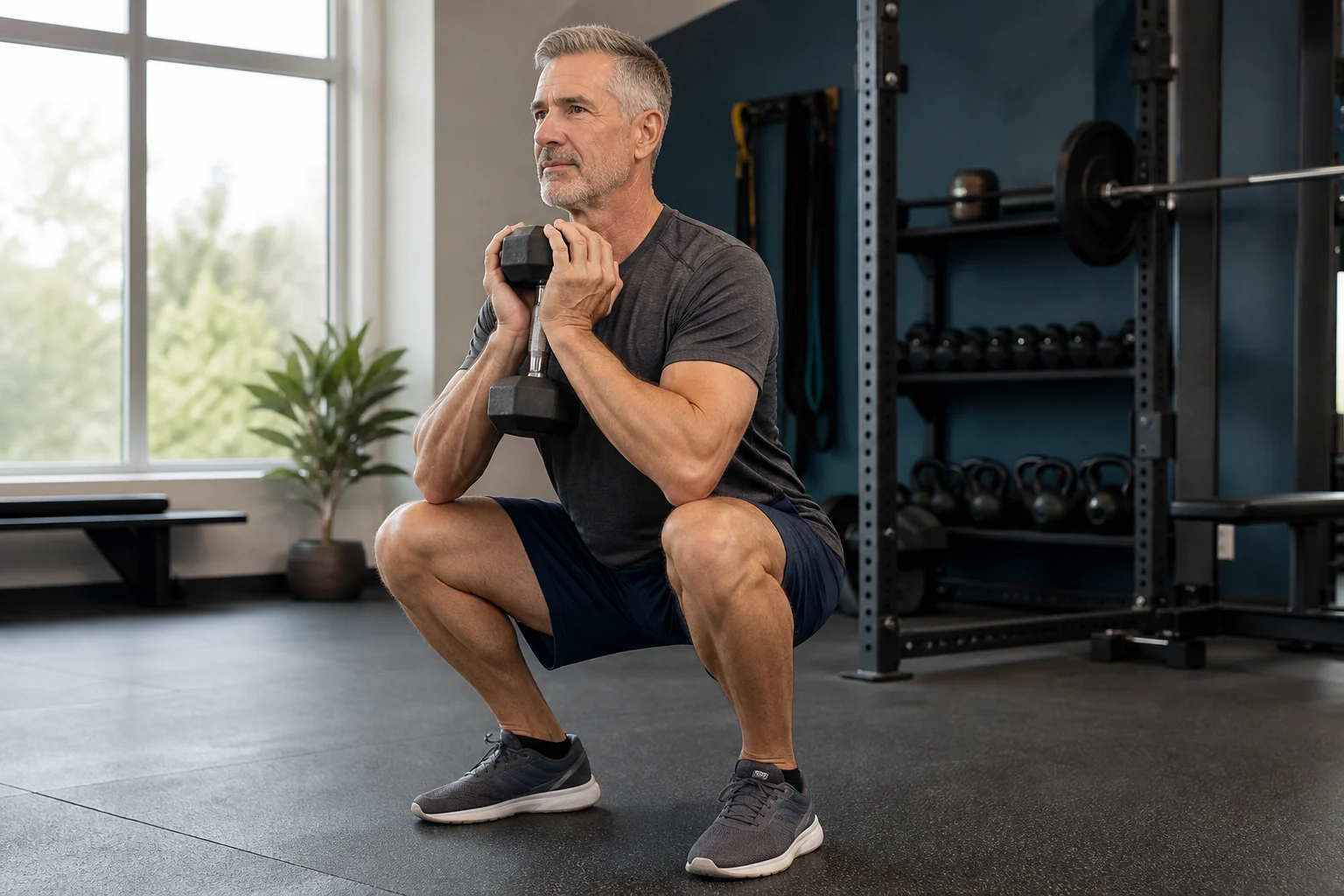
A healthy man in his fifties performing a controlled dumbbell squat in a bright, welcoming gym.

Strength training after 50 doesn't require a fragile-body routine or a bodybuilding lifestyle. It requires a clear starting dose, exercises you can control, and a way to progress without ignoring symptoms. For most healthy beginners, two full-body sessions per week cover the major movement patterns and leave enough space to learn how your body responds [1]. This guide separates normal training decisions from questions that need individual medical input. It covers muscle gain, home workouts, sets and repetitions, protein, creatine, cardio, joint pain, blood pressure, and recovery. The goal isn't to make age the center of every decision; it's to use age, training history, health, and current capacity as context. The largest benefit usually comes from moving from no resistance training to a regular program you can sustain [1].

The two-day starting framework

Use one squat or step, one hip hinge, one push, one pull, and one carry or trunk exercise in each session. Start with one or two working sets. Finish while repetitions are still controlled, then make one small progression after two consistent sessions. Barbells are optional; machines, dumbbells, bands, and bodyweight all work when the resistance can grow.

Health changes the exercise—not the value of training

Knee or back pain, hypertension, heart disease, medications, and previous surgery can change exercise selection and dose. They don't automatically make resistance training inappropriate. The AHA supports appropriately prescribed resistance exercise for many people with and without cardiovascular disease [3]. Concerning symptoms and unstable conditions need individual assessment rather than an internet rule.

How to use this pillar

Start with the beginner workout, frequency, load, and sets-and-reps guides. Then open only the pages that match your situation: home equipment, fat loss, protein, creatine, joint symptoms, cardiovascular health, or recovery. Each page gives a decision rule and the limits of what a general article can safely answer.

Sources we drew from

  1. 1

    Brad S. Currier et al. · 2026 · Medicine & Science in Sports & Exercise

    The ACSM position stand prioritizes regular, individualized resistance training of all major muscle groups at least twice weekly.

  2. 2
    Adult Activity: An OverviewOfficial guideline

    Centers for Disease Control and Prevention · 2023 · CDC

    Adults should combine weekly aerobic activity with muscle-strengthening activity on at least two days.

  3. 3

    American Heart Association · 2023 · Circulation

    The AHA scientific statement describes resistance exercise as beneficial for many people with and without cardiovascular disease when appropriately prescribed.

A workout plan that keeps up with real life.

  • Built around your goal — every session belongs to the same direction.
  • Fits today's conditions — time, physical state, and equipment shape the work.
  • Updates what comes next — training feedback keeps the plan moving with you.

See how Dorsi builds a personalized workout plan around your goals and current conditions.

Frequently asked questions

From the Dorsi blog