Can You Lift Weights With Knee Pain After 50?

Safety first

Often yes, but the exercise, range, load, and diagnosis matter more than age. Use movements that keep symptoms tolerable during the session and back near baseline afterward. A hot swollen joint, locking, giving way, major trauma, or rapidly worsening pain needs assessment before a generic workout.
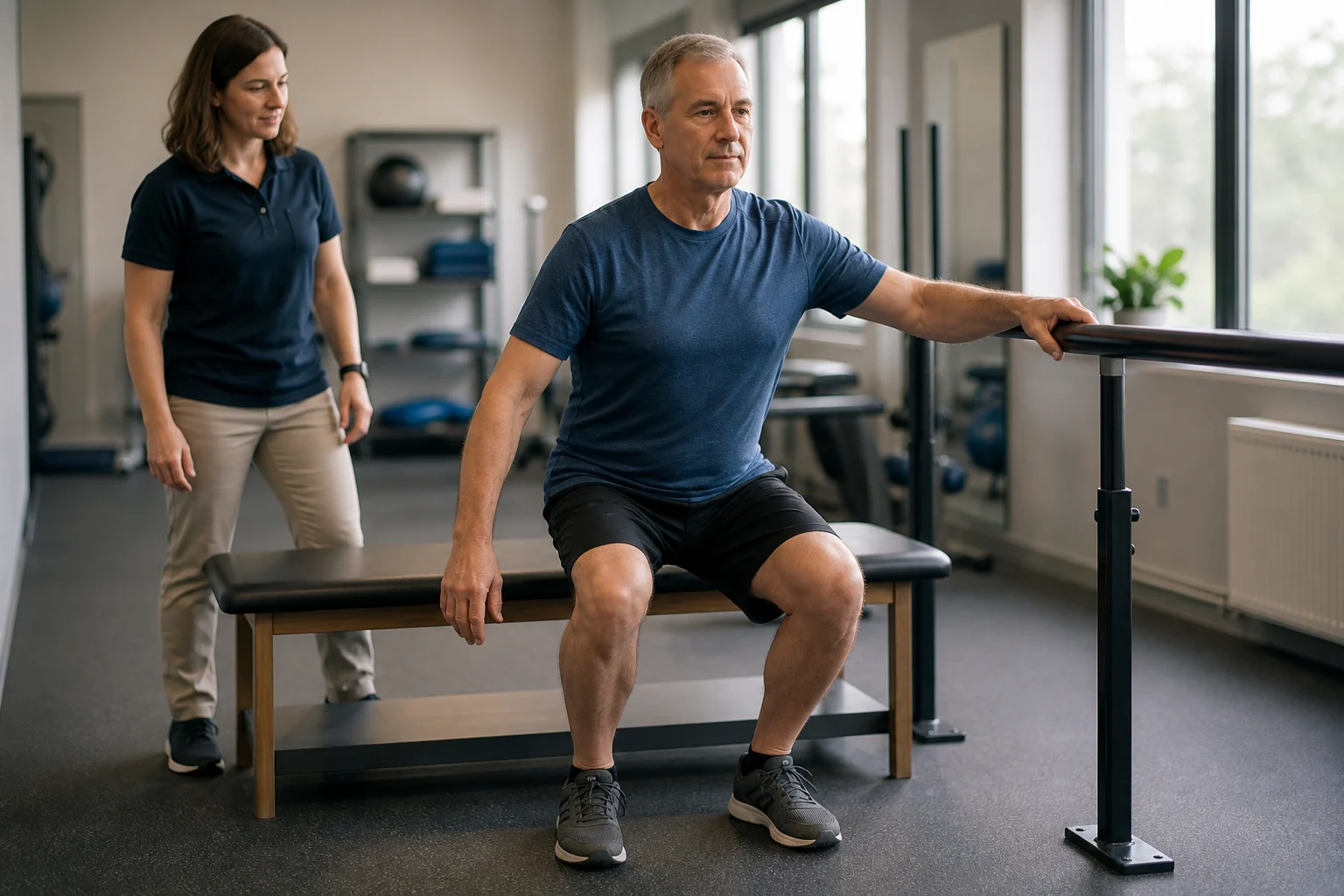
A man in his fifties performs a supported box squat while a physical therapist observes.

Pain does not automatically mean that all loading is harmful, and pushing through escalating symptoms is not a badge of progress. Start with stable variations and adjust one variable at a time [1].

Change the movement before abandoning it

Try a higher box squat, supported split squat, step-up height you control, or leg press with a comfortable range. Slower tempo and hand support can reduce uncertainty.

Use a response rule

Mild symptoms that settle after training may be acceptable; sharp pain, increasing swelling, or a next-day flare that disrupts walking means the dose was too high.

Keep training the rest of the body

A knee limitation does not require stopping rows, presses, hinges, carries, and suitable aerobic work. Maintain capacity while the knee plan is clarified.

When the answer changes

From the Dorsi blog

Sources we drew from

  1. 1

    Brad S. Currier et al. · 2026 · Medicine & Science in Sports & Exercise

    The ACSM position stand prioritizes regular, individualized resistance training of all major muscle groups at least twice weekly.

A workout plan that keeps up with real life.

  • Built around your goal — every session belongs to the same direction.
  • Fits today's conditions — time, physical state, and equipment shape the work.
  • Updates what comes next — training feedback keeps the plan moving with you.

See how Dorsi builds a personalized workout plan around your goals and current conditions.

Related topics