Can You Start Strength Training at Home After 50 Without Equipment?

Start here

Yes. A chair, wall, floor, stairs, and a loaded backpack can cover a beginner program: sit-to-stands, wall or counter push-ups, supported split squats, hip bridges, backpack rows, calf raises, and carries. The key is a safe way to make each movement gradually harder [1].
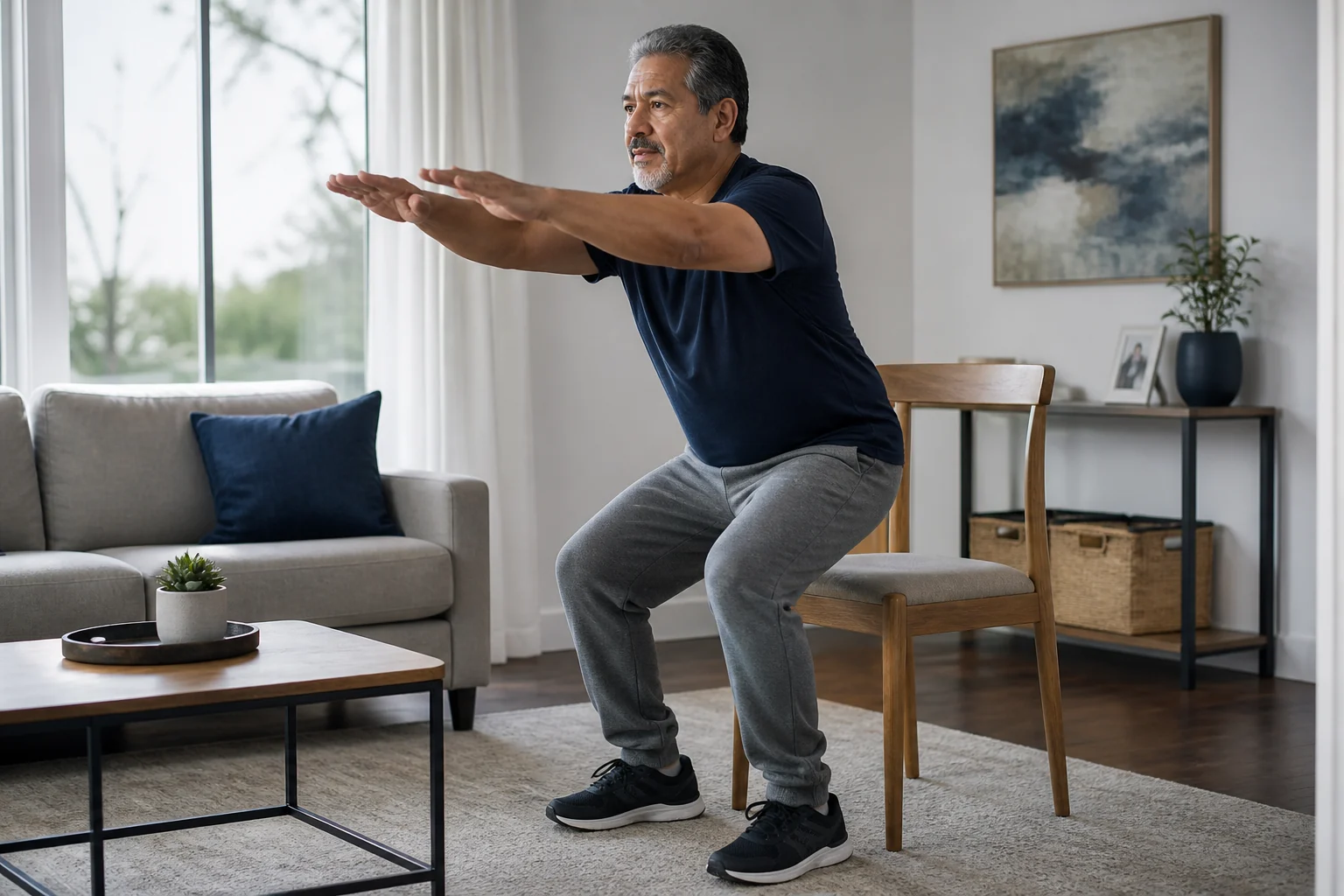
A man in his fifties performs a chair sit-to-stand in his living room.

Home training counts when it challenges the muscles and progresses. ACSM found that home-based and bodyweight programs can improve strength and function; a gym is a tool, not a requirement [1].

Build a five-move circuit

Pick a knee-dominant move, hinge or bridge, push, pull, and carry or trunk exercise. Perform one controlled set of each, rest, then repeat if technique remains stable.

Create progression without plates

Add repetitions, slow the lowering phase, increase comfortable range, reduce hand support, or add books to a backpack. Change only one lever at a time.

Know when equipment becomes useful

If an exercise reaches very high repetitions without much effort, a band or adjustable dumbbell may make progression simpler. Equipment solves a loading problem; it does not validate the workout.

Questions before you start

From the Dorsi blog

Sources we drew from

  1. 1

    Brad S. Currier et al. · 2026 · Medicine & Science in Sports & Exercise

    The ACSM position stand prioritizes regular, individualized resistance training of all major muscle groups at least twice weekly.

A workout plan that keeps up with real life.

  • Built around your goal — every session belongs to the same direction.
  • Fits today's conditions — time, physical state, and equipment shape the work.
  • Updates what comes next — training feedback keeps the plan moving with you.

See how Dorsi builds a personalized workout plan around your goals and current conditions.

Related topics